
Diplomatic breakthrough scheduled for Friday in Istanbul coincides with deployment of USS Abraham Lincoln to the Persian Gulf.
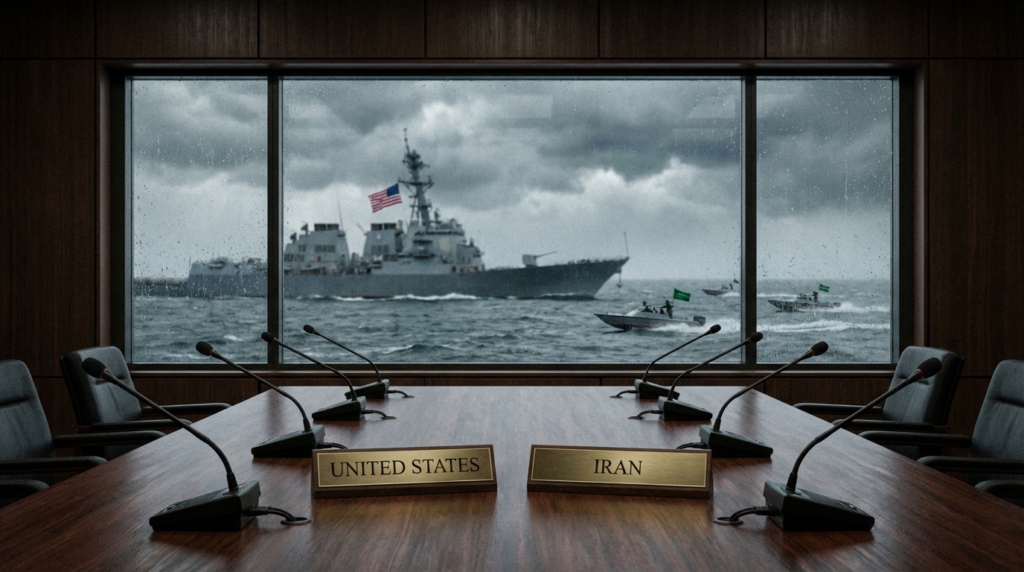
Facing a convergence of military threats and regional diplomatic pressure, Iranian President Masoud Pezeshkian has authorized direct negotiations with the United States. The talks, mediated by regional allies, aim to de-escalate tensions that have brought the two nations to the brink of open conflict.
President Pezeshkian formally announced the initiative via social media, designating Foreign Minister Abbas Araghchi to lead the Iranian delegation. While expressing readiness to talk, Pezeshkian set firm conditions, demanding a “suitable environment” for dialogue devoid of the “unreasonable expectations” that have characterized recent U.S. posture.
The diplomatic channel opens against a backdrop of severe military signaling. U.S. President Donald Trump warned from the White House regarding the consequences of a failed deal. “If we can work something out, that would be great,” Trump told reporters, while simultaneously cautioning that “bad things would happen” otherwise.
Shadow of Conflict
The urgency of the Istanbul summit is driven by recent kinetic engagements. The U.S. military previously conducted “Operation Midnight Hammer,” targeting Iranian nuclear sites, a campaign aimed at crippling Tehran’s atomic ambitions. These strikes complemented earlier Israeli operations against nuclear scientists and infrastructure.
In a show of force, the Pentagon has dispatched what President Trump termed “tremendous force” to the region, spearheaded by the USS Abraham Lincoln carrier strike group and its complement of 70 aircraft. In response, Supreme Leader Ayatollah Ali Khamenei has vowed that any further direct attacks on Iranian soil would trigger a comprehensive regional war.
While external threats loom, the Iranian government is also grappling with a severe internal legitimacy crisis following a lethal crackdown on dissent. Rights groups estimate the death toll from recent anti-government protests is significantly higher than official state figures of 3,117.
SOURCES: White House Press Pool, Office of the Iranian President, Reuters, CNN, US Defense Dept.
This report has been significantly transformed from original source material for journalistic purposes, falling under ‘Fair Use’ doctrine for news reporting. The content is reconstructed to provide original analysis and reporting while preserving the factual essence of the source.