
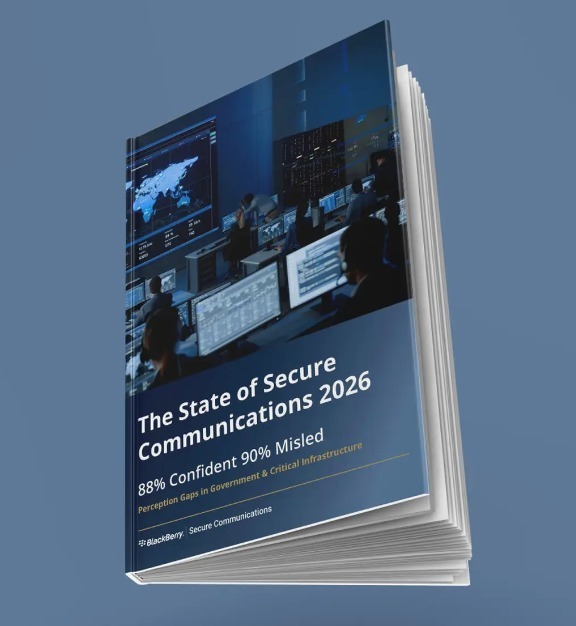
Despite high self-reported readiness, the majority of critical infrastructure organizations lack unified secure platforms to manage major emergencies.
Operational resilience during catastrophic events is being severely undermined by a reliance on fragmented, consumer-grade communication methods. While 90% of security executives express confidence in their ability to navigate a crisis, empirical data shows a starkly different reality. Less than half of the surveyed entities possess a dedicated, unified platform for emergency coordination, leaving command-and-control structures vulnerable during critical incidents.
Instead of deploying military-grade secure channels, government and infrastructure teams are attempting to manage crises using an improvised patchwork of everyday software. The BlackBerry survey highlights that 54% of organizations fall back on standard group chats, while 51% utilize basic email threads. Even more concerning, a significant portion still relies on shared spreadsheets and manual phone trees to orchestrate their incident response protocols.
“As threats evolve, from account compromise to large-scale surveillance, what may appear ‘secure enough’ can quickly become a costly attack surface.”
Security experts warn that these familiar tools are architecturally incapable of providing the real-time visibility and cross-agency synchronization required during a cyberattack or physical disaster. The failure to adopt interception-resistant technology means that during a crisis, the very communications meant to resolve the issue could be monitored, intercepted, or disabled by adversaries.