
The northern Chinese city of Ulanqab is expanding its green computing infrastructure by leveraging local wind and solar resources, having signed 109 data center contracts worth 5.68 billion yuan through August 2026 as part of national initiatives balancing digital technological growth with regional environmental protection.
Expansion of Computing Infrastructure
Historically recognized as the oat and potato capital of China, the municipality within the Inner Mongolia Autonomous Region has redirected its strategic focus toward data processing since the 2022 launch of the national “Eastern Data and Western Computing” initiative. Under a three-year plan announced in late 2025, municipal authorities aim to establish a green-powered “token city” to support rising demand for artificial intelligence capacity. Official statistics indicate that the local sector generated approximately 849 million dollars between January and August, representing a 40.3 percent year-on-year increase.
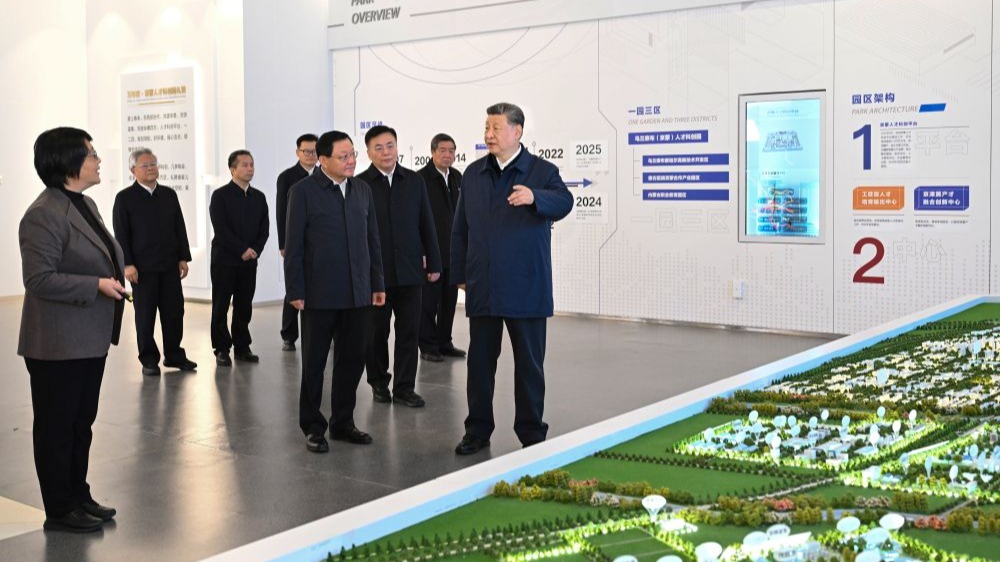
Chinese President Xi Jinping visited the Chahar High-Tech Industrial Development Zone in Ulanqab on Friday to inspect construction progress on an Inner Mongolia computing hub. During the inspection, Xi called for capitalizing on renewable wind and solar assets while maintaining strict coordination between economic progress and environmental conservation, urging the prompt completion and safe, efficient management of designated projects.
Benefiting from an average annual temperature of 4.3 degrees Celsius, the area relies on natural cooling for approximately ten months each year, reducing operating costs and energy consumption for major technology enterprises. Regarding the regional model, John Gong, an economics professor at the University of International Business and Economics, stated to CGTN:
Ulanqab effectively utilizes the region’s rich renewable energy resources to support China’s artificial intelligence development, and this visit highlights President Xi’s support for the Ulanqab development model, which leverages local resource advantages to foster both technological innovation and economic growth.
Environmental Preservation and Wetland Restoration
President Xi also inspected the Huangqihai Lake nature reserve on Friday to review ecological initiatives, examine shoreline conditions, and observe local wildlife. The closed-basin water body, which previously faced severe desiccation due to climate and regional factors, received county-level protection in 1993 before being designated as an autonomous-region-level reserve in 2003.
During the site inspection, Xi stressed the complete enforcement of China’s wetland protection law, adherence to ecological redlines, and preservation of biodiversity. For degraded wetland ecosystems, he called for prioritizing human-assisted natural recovery and executing scientific restoration measures to sustain regional habitats.